I finally got the swing arm back from the local mechanic.
I took the old driveshaft to him to install it in the swingarm and he noticed that there was a bit of slop in the U joints. So we had them replaced. These aren’t BMW parts but you can find people making them. I’ve since seen some on E-bay with grease fittings. My mechanic has been using these for quite some time now so I trusted his knowledge on this.
Tag Archives: cafe
Busy work while I wait
I’m waiting for my local mechanic to install new races and wheel bearings in the wheel hubs.
I’ve been waiting nearly a month… ugh.
I am also waiting for him to install a new U-Joint on the drive-shaft and then install the driveshaft in the swingarm.
Unfortunately, these are things i am relying on an expert to do because they require proper welding, proper tools or careful installation.
So… i might as well start re-assembling small stuff like the turn signals (which were coated to match the frame)…
Fork seal installation
A quick ‘How To’ install the fork seals.
You can pop the old seals out with a screwdriver or something else to pry them out. Just be cautious you don’t score or damage the inside of the fork leg/lower.
First make sure the fork lowers are clean.
Then sit the fork seals flat onto the top of the fork tube. It helps if you have a large socket, or something similar to help drive them in. I happen to have a 36mm socket that fits the diameter of the seal pretty good. It might be better if it was 34 or 35mm but it still did the trick.
I placed the socket over the seal, and tapped it in with a hammer. Here is a photo of the job with the seals about half way in: 
Here are the two fork lowers with the seals fully inserted:
Rotor Removal
Once again, I had to return to the old donor engine block for some spare parts. The rotor on the engine to be rebuilt was a rusted mess. The rotor on the donor engine looks brand new. I will test it with an voltmeter to be safe, but being that it is so clean, i am not too worried. 
To remove a Rotor, you need to have the rotor puller bolt.
BMW sells it, Huckey BMW sells one, Motoelekt.com sells one… it is between $5-$10. Or, you can search online on how to make your own. (click the photo to enlarge it)

Once you removed the alternator,
To remove the rotor, all you will need is a 6mm hex bit and a 13mm socket.

Loosen the rotor bolt with the 6mm hex bit and remove it completely. You may need to block the engine from rotating.
Then screw in the puller bolt.

Begin slowly tightening it with the socket until the rotor pops off the crank. That’s it. Done.
Steering Lock Install
This job should have taken me 3 minutes. Instead, it took nearly an hour and a few new curse words were invented.
You can remove the lock easily if you have the key.
Simply remove the chrome cover, and then insert the key, turn it counter clockwise until it stops (around 10 o’clock) and then wiggle and pull the key/assembly out.
If you don’t have the key and you removed the steering assembly, You can use a drift on the front of the lock, and punch the entire lock assembly through the neck. It will ruin the lock.
If you don’t have the key and you didn’t remove the steering assembly, it can be drilled out if your run a small drill bit between the brass and silver part of the lock…at the 2 o’clock position.
For more on Lock Removal, check out Duane Ausherman’s site which is chock full of other BMW tips too:
http://w6rec.com/bmw-motorcycle-fork-and-tank-lock-neiman-keys/
With a new lock, chrome cover and pivot pin from BMW, i thought the installation job would be a simple task.
It turns out that these new locks and chrome covers are different then the originals and require some modification.
Here is the new assembly from BMW:

With the key inserted, you turn the lock to line up the small flathead screw-pin with the upper shark fin and slide it into the frame.
Once it is inserted, you can turn your steering assembly/handlebars to the right.
Turn the key and press the lock into the frame. The lock’s end should insert into a hole in the neck of the tripple tree. It should go deep enough into the frame/neck that when you twist the key back, it will catch in a receded position.
Here is the hole I am referring to:
This is what a locked steering lock looks like. Notice how it is receded into the frame:

After scratching my head and swearing a few times, no matter how hard i pushed that lock into the frame/neck, it would not reach the second “catch point” to lock.
I tested the lock to make sure it fit in my spare triple tree and it did.
I then wondered if the notch wasn’t deep enough so i ground it down on both sides a bit. 
It still didn’t work properly. I cleaned out the inside and then started doing some tests with grease on the lock. After i made some failed attempts with a greased up lock, i would remove it and see where grease was hitting and not hitting the innards of the frame. It seemed that i had to grind the notch even further.

I did a test fit and Bingo! It worked!
Don’t forget the small spring that goes around the end of the lock!
That spring is what provides the resistance to do the locking and unlocking.
It is BMW part number 32 32 9 016 104

I then lubed up the spring and lock and inserted it into the frame.
Then it came time to attach the chrome cover and pivot pin. I put it all together and then realized that the cover doesn’t slide as nice as the old one. I took it apart and realized that the old cover has a notch on the back that leaves space for a small pin that sticks out of the frame and acts as a ‘catch’ point to either open or close the cover.

Son of a B$#@@. Why can’t this job be easy?
I pulled the cover off the bike and saw that the protruding pin from the frame left some convenient scrapes on the back of the cover.
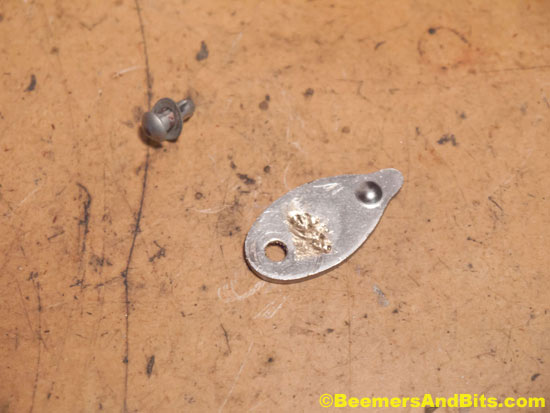
I put the plate under my drill press and shaved down a small pocket where the pin makes contact with the cover. Not the cleanest job but it works and nobody will ever see the rear of that cover.

Here is a second attempt at the rear from another bike restoration. I routed it out with a tiny routing bit:

Prepping for Race Tech Gold Valve Emulators
I’ve heard great things about these Race Tech Gold Valve Fork Emulators. What I have had trouble with, is getting the proper instal instructions and modifications needed for a 70’s BMW motorcycle.
Hopefully this will help others who plan to do the modification.
For information on how the emulators work, please read through this link.
Dampening Rod Forks and Emulators
For instructions and diagrams of a BMW /5 fork leg, check out an old Beemers and Bits link:
http://beemersandbits.com/2011/12/lower-fork-leg-anatomy-of-a-5-bmw-motorcycle/
Unfortunately, I’m not going to test the results anytime soon. The bike is undergoing an entire rebuild and I’m at the point where i am trying to make a rolling chassis. So as i wait for some fork seals from BMW, I am starting to prep all the parts for reassembly.
With the dampening rods removed from the forks, they need to be disassembled and modified.
Here is the dampening rod with the bottom nut removed and the 1/4″ drill bit to be used later.
Note that the spring and check ball get discarded when doing this modification.

Here is the upper piston removal:

It really helps if you have a drill press for something like this.
All the holes at the bottom of the rod need to be widened to 1/4″ inch.
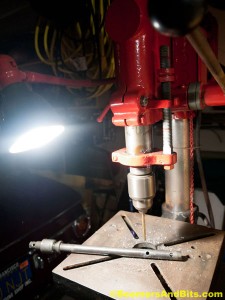
Here are both dampener rods and an old rod. You can see the difference in hole size to allow for more oil flow. Also note my gun cleaner and airbrush nozzle cleaners in the top of the photo. The inside of the rods and holes needs to be cleaned thoroughly after you drill them. Any small sharp bits of metal will chew up your fork seals, the inner fork tube walls, and all the other moving parts.

With the piston removed, a hole needs to be added to the top of the piston to allow more oil flow to the emulator. A lathe would probably be the best tool for the job but i had to improvise with my drill press. I found it easiest to drill from the inside. And i held the piston in place with a 13mm wrench. (My method may not be the safest or smartest but it worked for me. Be Safe!). 
A Before and After of the piston top.
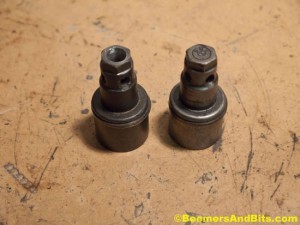
I have read some suggestions that say to cut the top of the piston off entirely, or to cut it where the holes are. I want to be able to tighten the piston on the dampener so I drilled a hole into it. This isn’t my photo but it give you an idea of another option:
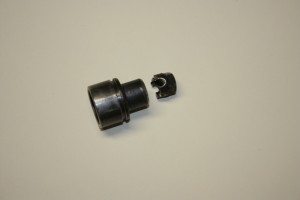
In the end, i wound up shaving down the hex head of the piston a bit. i want to make sure that the part of the emulator that sticks down in the PVC spacer does not hit the piston. I also widened the piston holes to allow for more oil flow.

Then it was off to the local hardware store to buy some 3/4″ PVC to use as a spacer between the piston and the emulator. $.64 got me a foot of pipe. More then i’ll need. 
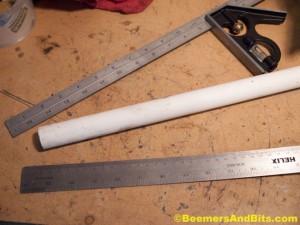
It is suggested that you cut a length between 35-40mm. Since I didn’t cut the piston, i figured 40mm would be a safe size to keep distance between the piston and the emulator. After i squared up the ends, it was more like 39mm. 
If you are using Race Tech springs as well, it is suggested that you add 15mm PVC spacers at the top of the springs. The Race Tech springs are slightly shorter then stock springs.
Here is a 15mm aluminum spacer next to my PVC spacers. The aluminum spacer was on one of the bikes when I disassembled it. 
It is also recommended that you use use 15wt Fork Oil set to 130mm Oil Level (from top of fork tube to oil with the fork tube at bottom of stroke & the fork spring removed.)
I’ll be sure to post back once I feel the difference between my stock /5 forks and the forks on the rebuild bike.
Steering Race and Bearing Install
How to install races and steering bearings.
First, freeze your races for a day. Hopefully this will allow the metal to shrink for an easier install. Does anybody else shop at Trader Joes? 
While they are cold, quickly set them into the frame and use a drift to hammer them in EVENLY.

It helps if you have an old race handy to drive the race into the frame until it bottoms out. If you don’t drive it in all the way, it will eventually settle while you are riding and your steering will require constant adjustments. If you are using an old race, try to cut a slice in the race or shave it down a bit so it doesn’t get stuck in the frame.

Here is a photo of the bottom race that is receded into the frame (with some grease on it). 
Now it is time to prep the triple tree. /5’s have a small dust protector cup that sits at the base of the yolk under the bearings. 
When it comes time to install the bearing, you will notice that it will not fit onto the stem.
You need to arm yourself with heat. I ended up only using the heat gun but still managed to set off a fire alarm (my wife wasn’t happy). You only heat the lower bearing by itself. That’s it. I had a scrap piece of plywood that i used as a surface to heat the bearing on. 
Be CAREFUL when installing the bearing. If it is hot enough, it should drop right on. Make sure it is seated properly (Flat on the base) and it will quickly cool into position.
I noticed that the upper tightening clamp was NASTY. So i did a quick cleaning and polish… Only to realize from another BMW guru (Duane) that they were only used for a year or two on /5 and then quickly replaced by something better. 

Here are all the parts. Grease up the bearings REALLY good. Grease up the races too. Plan on getting messy and working the grease into the bearings as much as you can. Then add a wee bit more. 
I don’t have photos of the upper bearing install.
When you install the lower triple tree and steering stem into the bottom of the neck, you hold it into the neck as tight as possible. You don’t need to heat the upper bearing.
You set the bearing on the neck,
Then install the chrome dust cover,
Then let the tightening ring do all the work and ‘seat’ the upper bearing into the upper race.
The manual says to tighten it all the way until there is no free play anymore, and then slightly back off.
Here is the /5 Tightening nut. BAD:
Here is the /6 tightening nut. BETTER:
Then you can install the upper triple tree and steering neck nut. (Note: a San Jose Triple Tree is in the photo. Toaster Tan is another aftermarket option for triple trees.)